In this OPA1622 power supply comparison, the same amplifier, signal setting and load were retained for both power-supply arrangements.
Read more: Can a Switching Power Supply Replace a Toroidal Transformer in a High-End Headphone Amplifier?For this GraceNote Audio experiment, we compared two power-supply approaches using the same OPA1622 headphone amplifier. The amplifier and test conditions remained unchanged; only the power source was different.
Two Ways to Power the Same Amplifier
The first option uses a traditional Avel Lindberg Y236203 toroidal transformer rated at 50 VA.
The second uses a compact Hi-Link HLK-10M15B switching module rated at 15 V, 0.67 A and 10 W, followed by linear regulation.
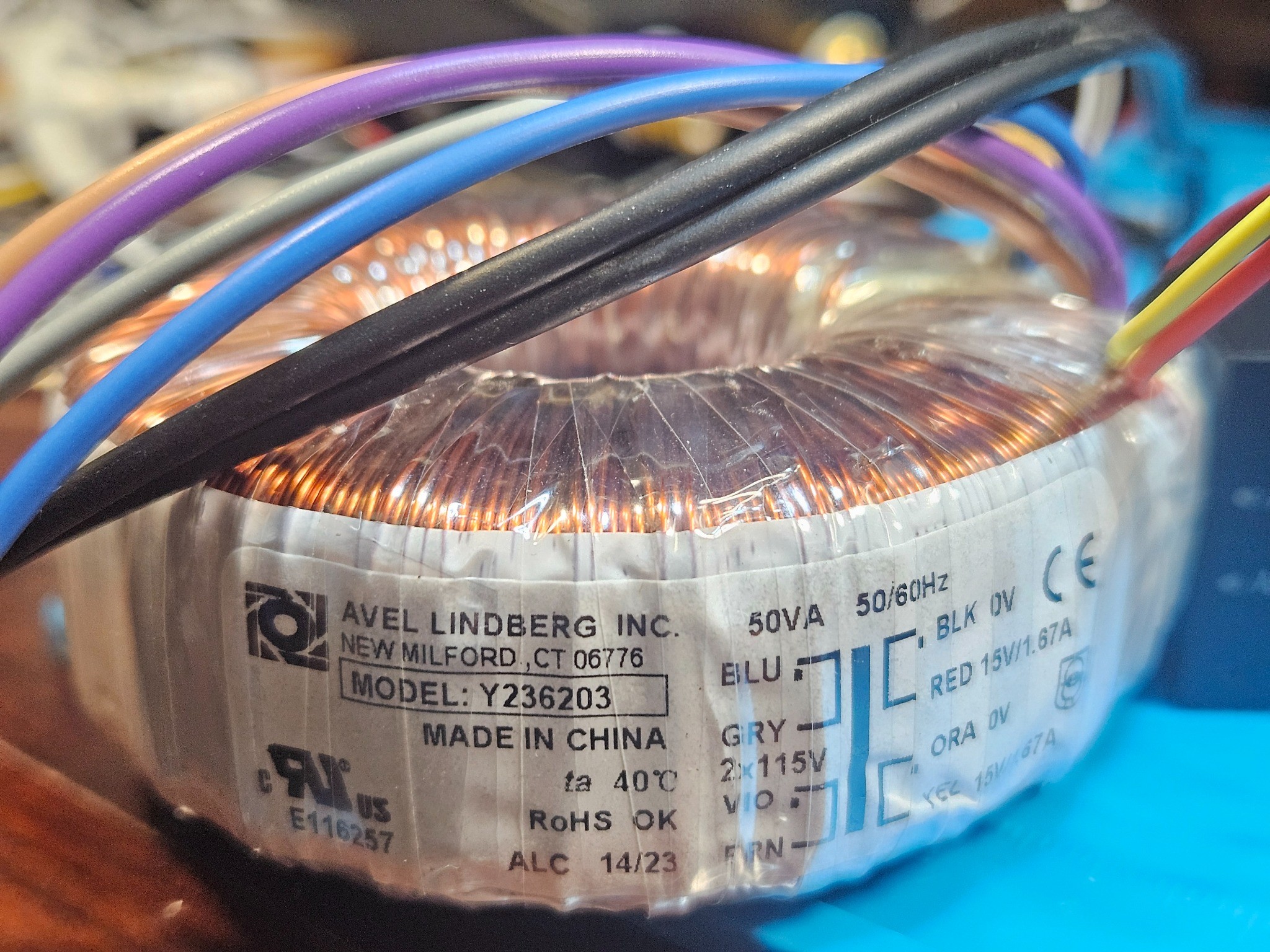
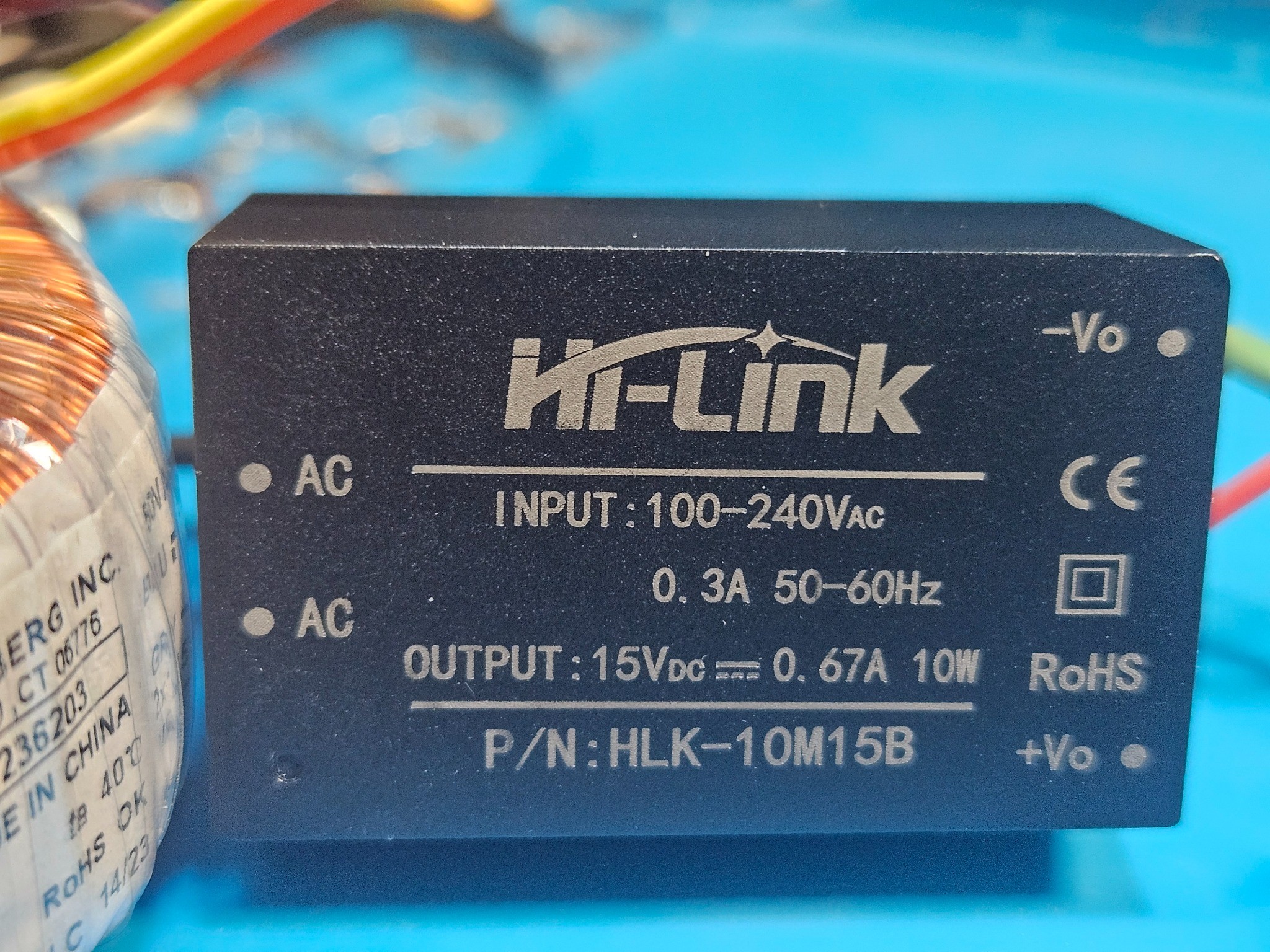
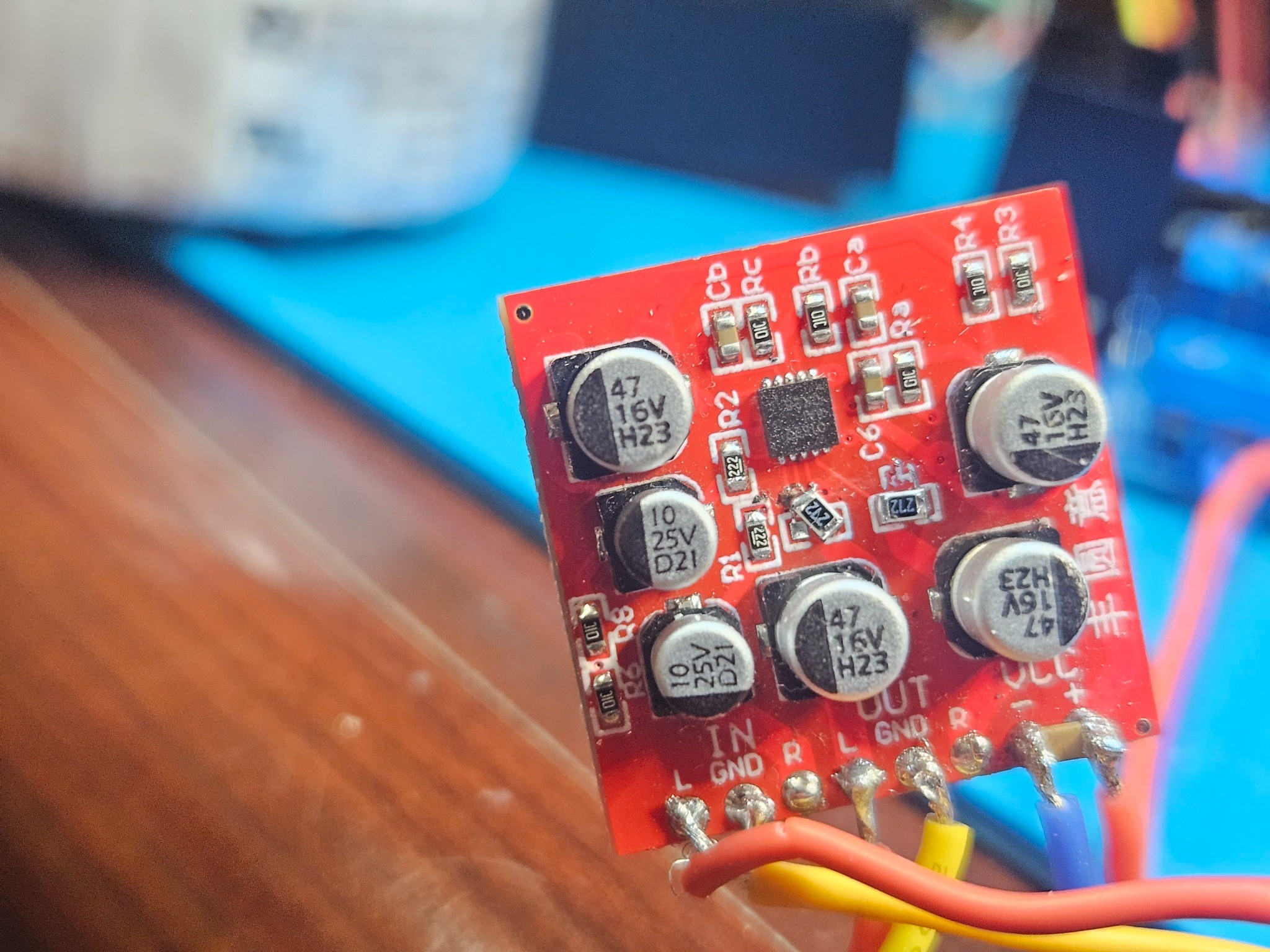
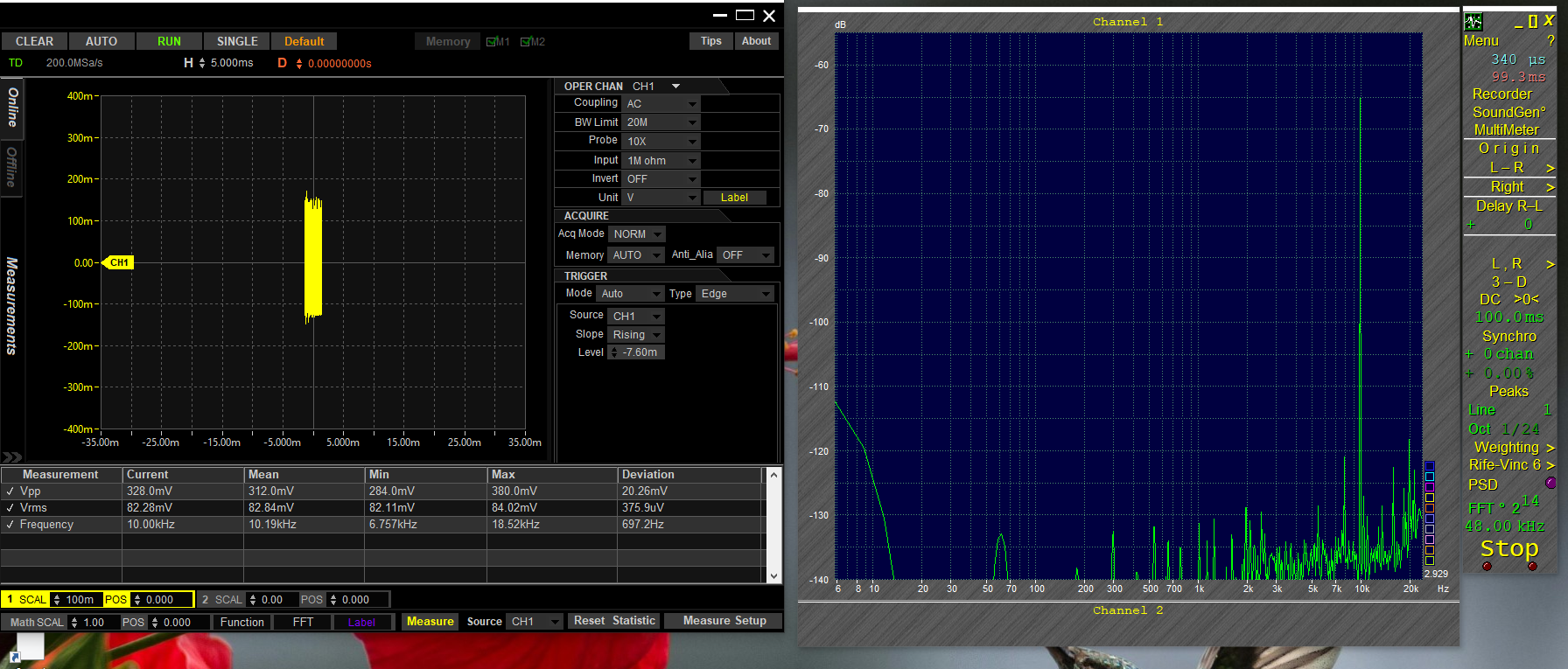
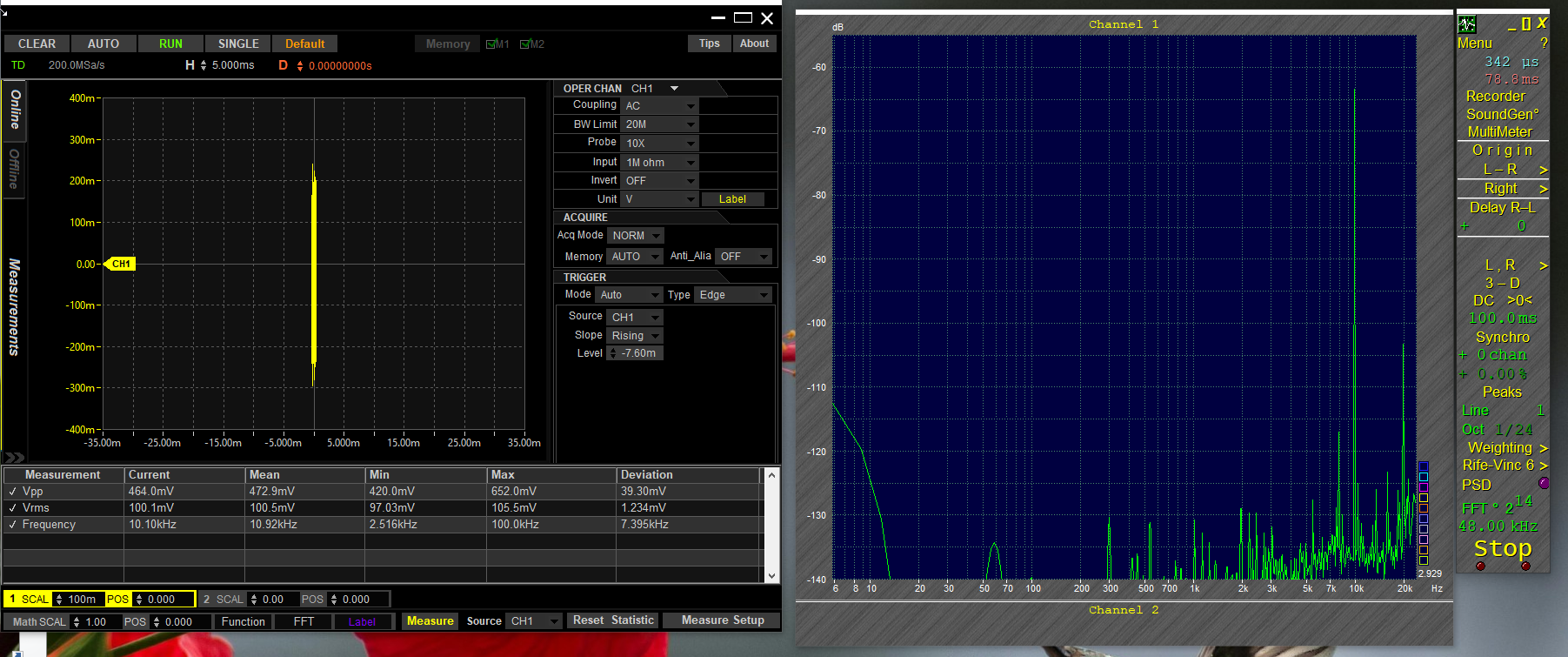
The comparison used the same 100 mV test-signal setting and a 200 Ω load. Measurements were performed at three frequencies: 100 Hz, 1 kHz and 10 kHz.
For the amplifier’s technical specifications, see the official Texas Instruments OPA1622 datasheet.
Noise With No Input Signal
A Coffee Tin as a Transformer Shield?
Could an ordinary metal coffee tin help reduce unwanted interference from a toroidal transformer?
We tried this simple experiment by placing an empty metal coffee tin over the transformer and comparing the spectrum with and without the cover.
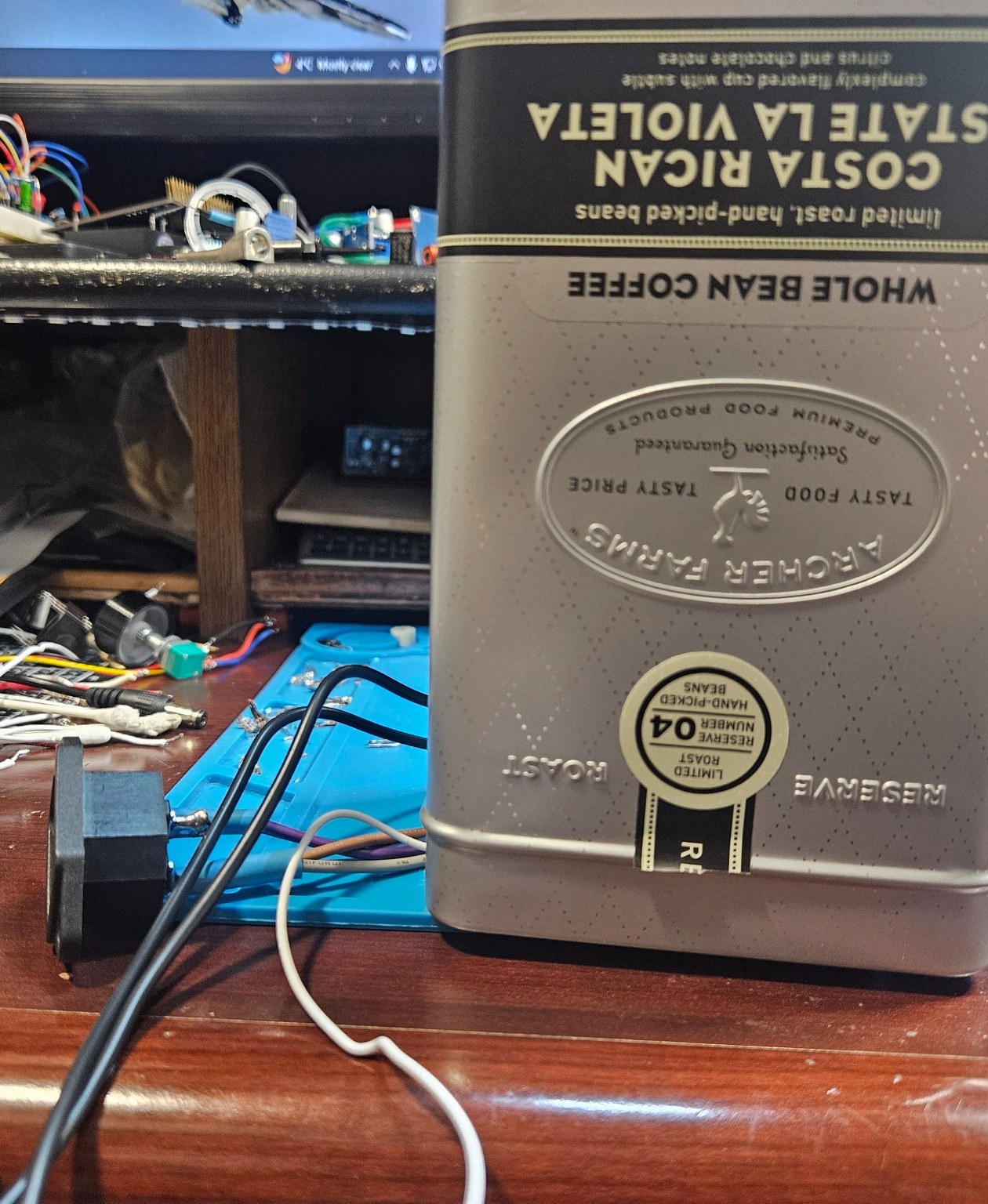
The spectrum showed a change, with some unwanted interference components reduced. The cover did not eliminate all interference, but the experiment demonstrated an interesting practical possibility.
Sometimes an unexpected solution can be found in an everyday object.
We also checked the amplifier with no input signal. The input was shorted to ground, and a 200 Ω load remained connected.
Both channels were checked with both power-supply configurations. The measured residual noise was approximately 1.9 µV RMS. No distinct 60 Hz component stood out in the spectra.
Transformer Shielding
Another part of the experiment involved placing a metal cover over the toroidal transformer.
Comparing the spectra with and without the cover showed a reduction in some unwanted interference components. Metal shielding can help reduce transformer-related interference reaching nearby amplifier circuitry.
Measurement Comparisons
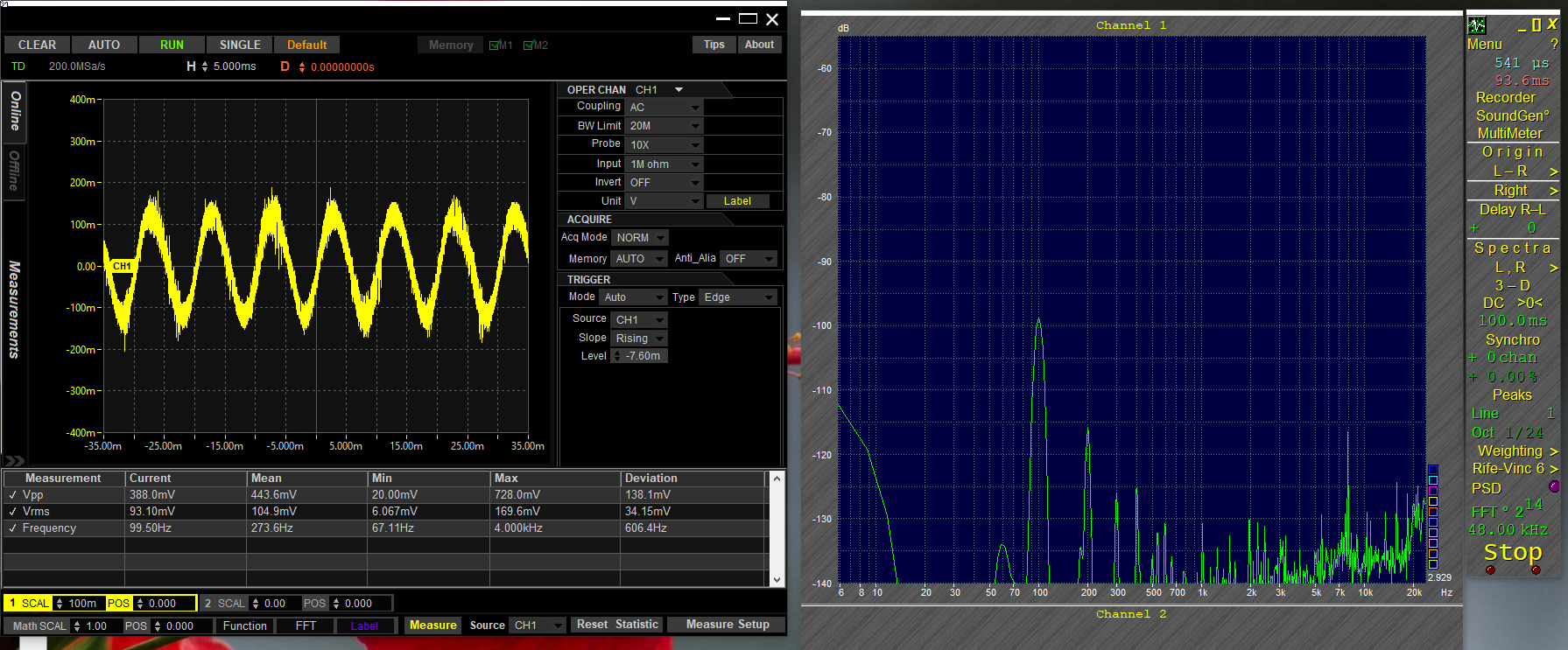
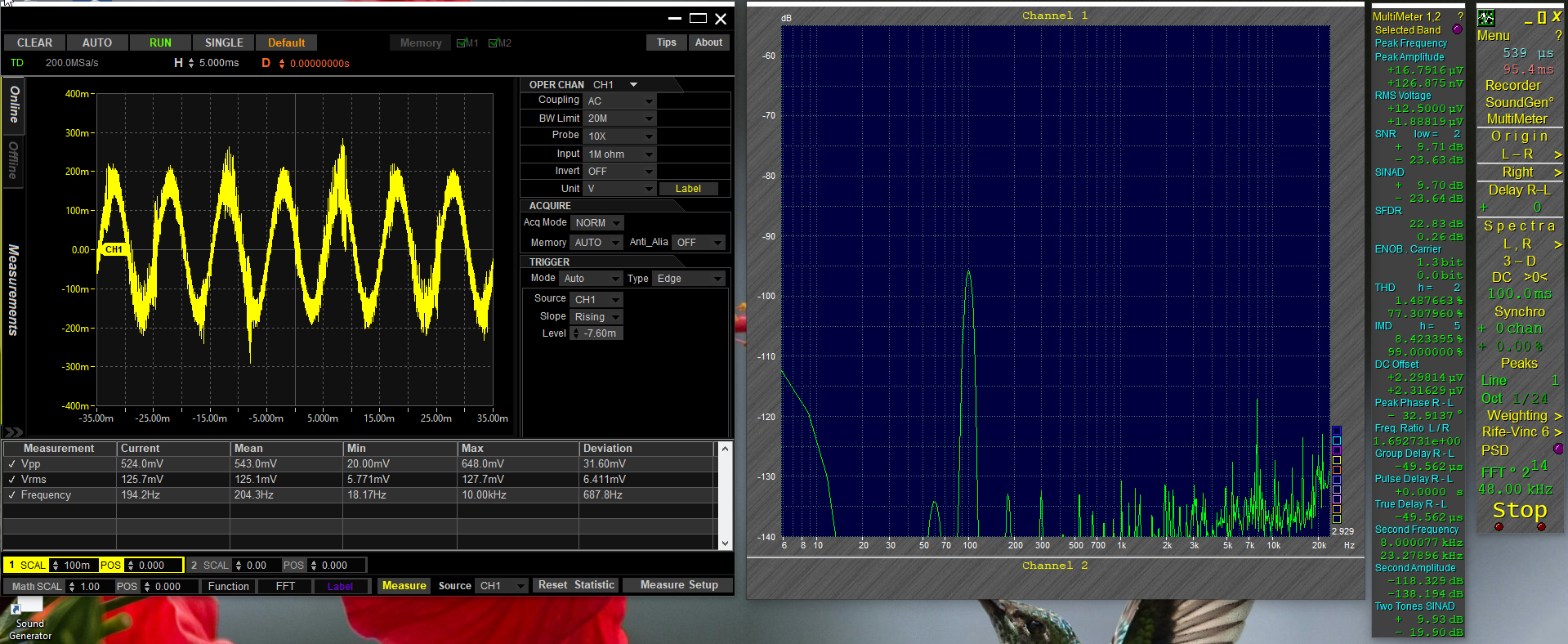
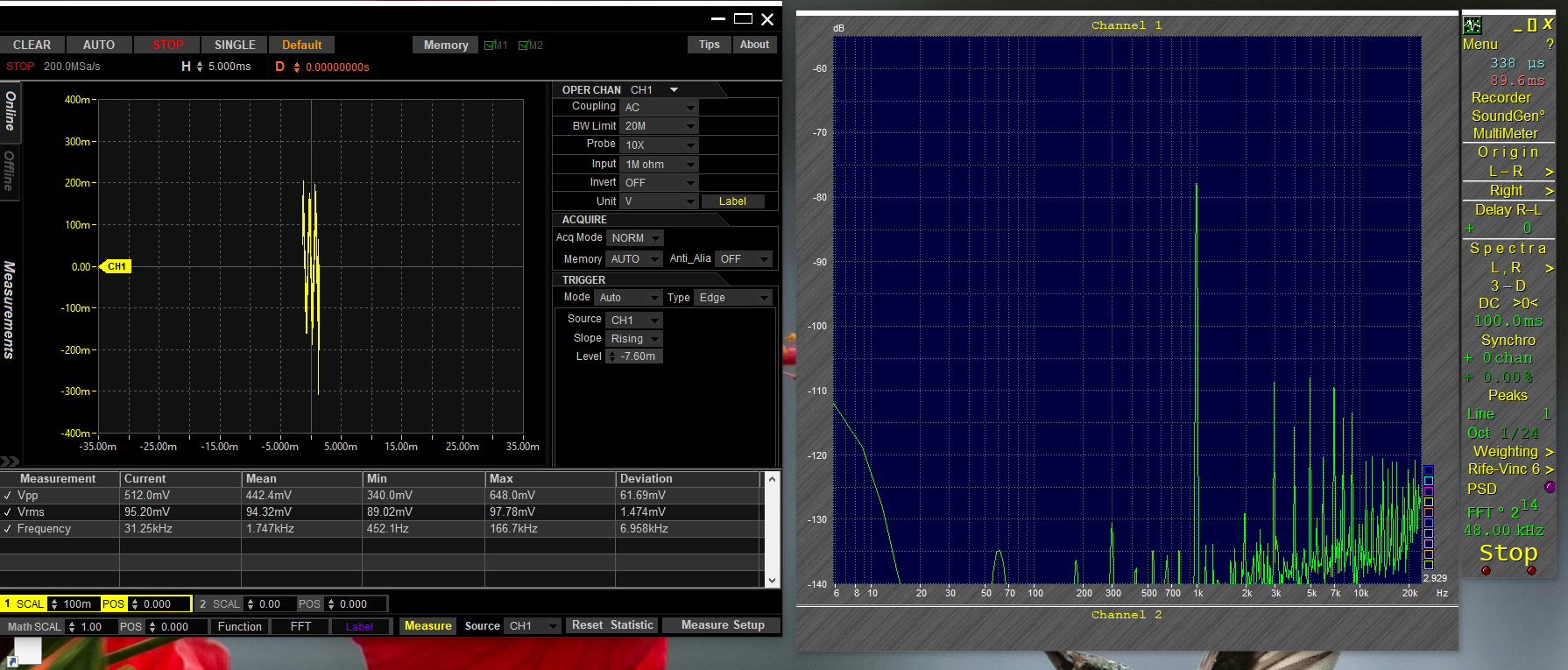
The following captures show the oscilloscope waveforms and corresponding spectra for both power-supply arrangements.
100 Hz
1 kHz
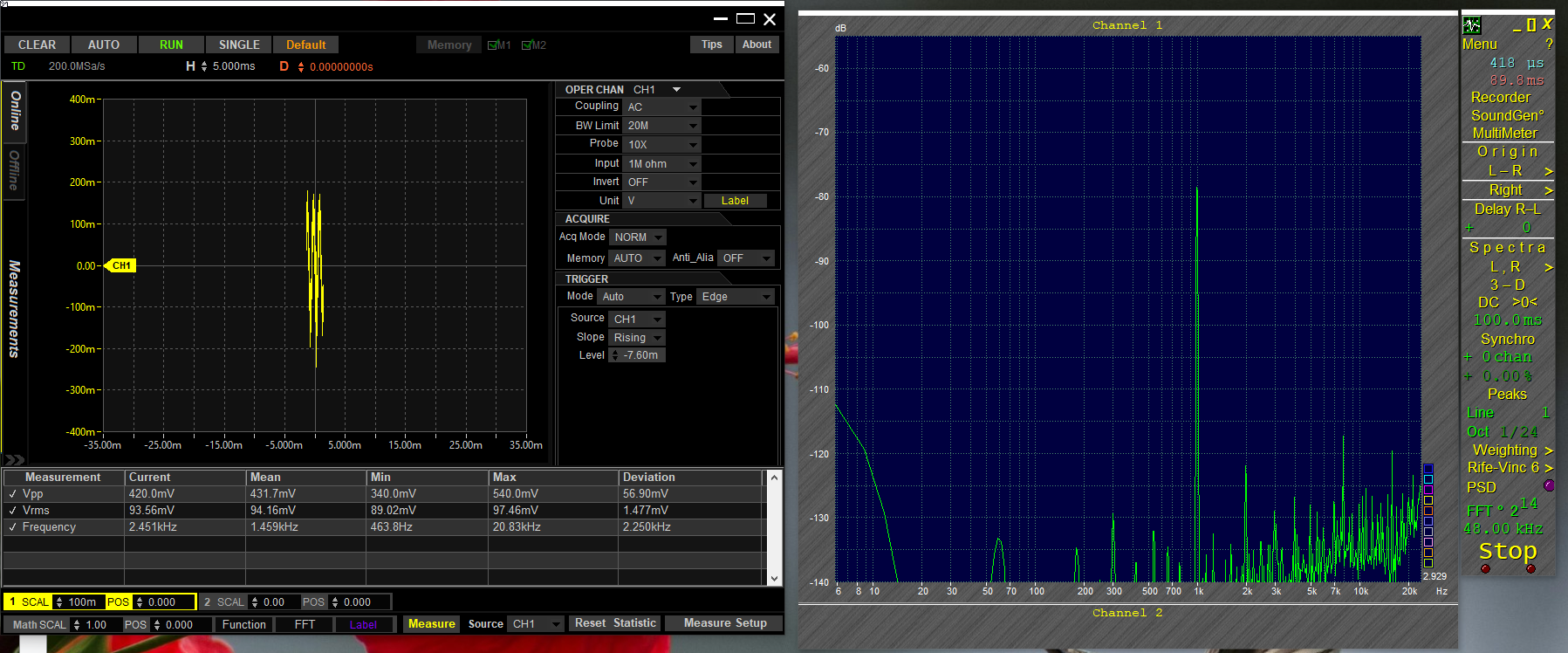
10 kHz
Putting the Results in Context
This OPA1622 power supply comparison is not intended to establish a universal rule that one type of power supply is always better. It looks at two specific implementations connected to the same headphone amplifier.
Keeping the amplifier, test-signal setting and 200 Ω load unchanged makes it easier to compare what happened in this particular setup. Measurements at 100 Hz, 1 kHz and 10 kHz provide several points of reference, while the no-input checks on both channels add another view of the background noise.
The metal-cover experiment also explores a practical way of reducing unwanted transformer interference. Different amplifiers, circuit layouts, grounding arrangements and power-supply designs may behave differently.
The results are best understood as a comparison of these two builds, not as a verdict on every toroidal transformer or switching supply. The final choice can depend on priorities such as size, weight, energy use and listening experience.
Space, Weight and Energy
Beyond the measurements, this OPA1622 power supply comparison considers the practical trade-offs of size, weight and energy use.
A toroidal transformer is a traditional choice, but it requires space and adds weight. A compact switching supply offers an alternative for those who want to reduce the size and weight of their equipment.
Energy consumption is another consideration, particularly with electricity prices continuing to rise. The choice of power supply can also influence the long-term cost of operating audio equipment.
Two different approaches, the same amplifier. Which one would you choose?
After all those measurements, perhaps it’s time for something completely different.
This OPA1622 power supply comparison does not declare a winner; it presents two approaches and leaves the choice to the reader.
Good coffee and good sound should come together.